
Area intelligence
Explore the comparison design: select a development type and authority, then switch between counts and category shares.
Explore the comparison ↗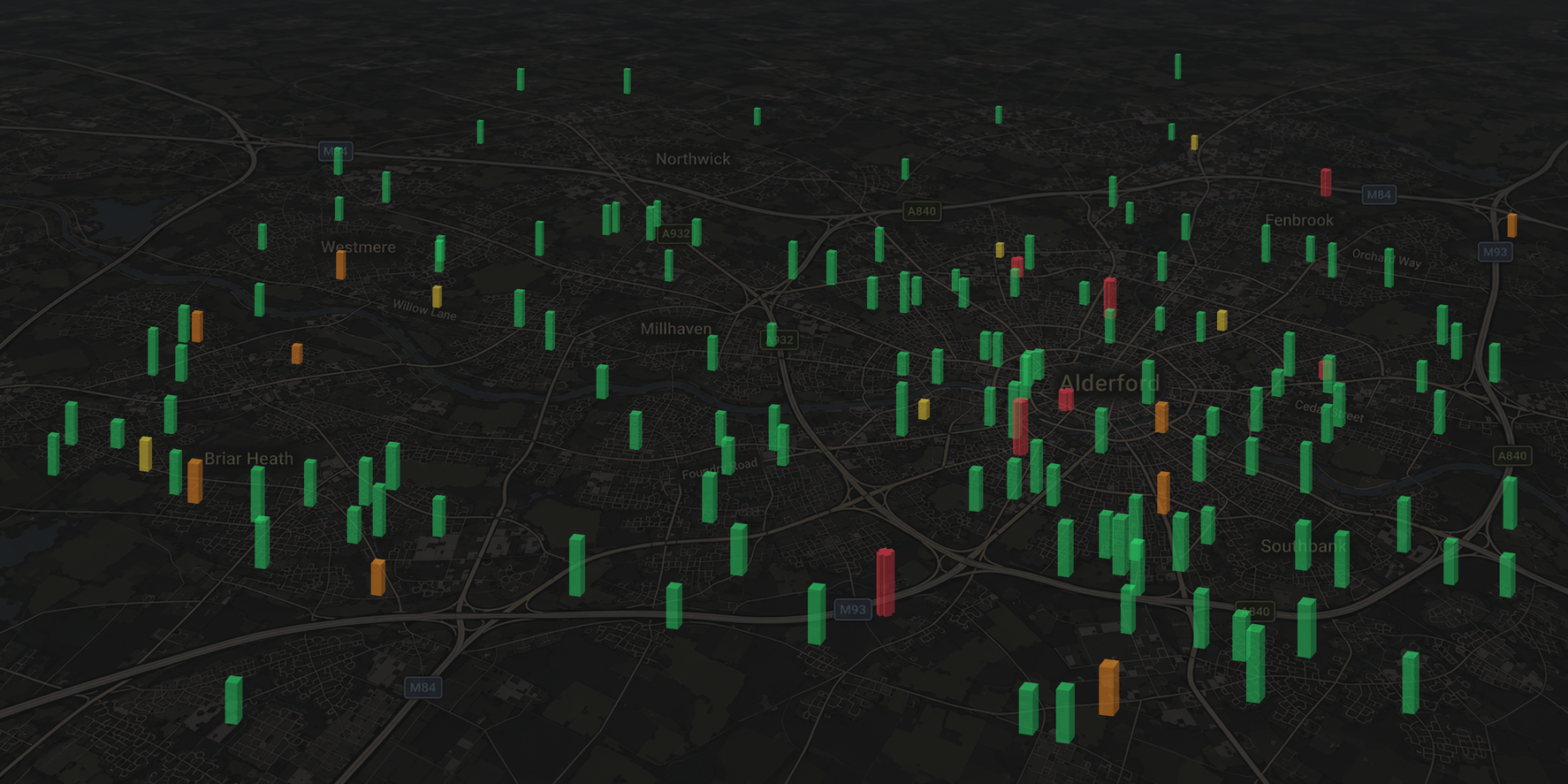
Introducing Refusal Atlas
Planning refusal datasets reveal more when you can compare them. Explore local patterns by development type, investigate the reasons and follow the evidence behind the statistics.
Dataset-led intelligence · Local planning context
One planning intelligence product
The foundation is the research collection. AI-extracted refusal reasons, development-specific categories and policy references connect detailed case investigation with wider statistical patterns.
Explore the comparison design: select a development type and authority, then switch between counts and category shares.
Explore the comparison ↗Investigate recorded refusals on a map, filter by reason and inspect individual cases. Location patterns provide a starting point for due diligence, with the underlying decisions close at hand.
Explore the location design ↗Follow an identified concern back to the decision notice, application documents and cited policies. Traceability is central to the product: summaries should lead to evidence that users can check.
Follow the policy evidence ↗The coverage model brings geography and development scope together. Each new authority extends the evidence base; residential, commercial and industrial segments retain their own relevant classifications.
Explore coverage & scale ↗From documents to comparisons
Retain refusal reasons, development types, policy references and source context. Detailed records give aggregated patterns their context.
Use development type, authority and reason categories to define the research question. Keep statistical bases visible when comparing differently sized datasets.
Move from category-level patterns to the underlying reasoning and policy context. Refusal statistics guide investigation; they do not predict a future planning decision.
A closer look at the product
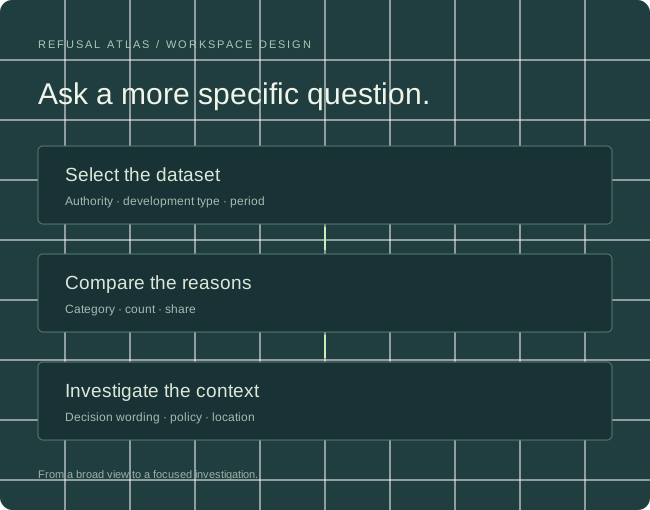
The comparison workspace brings authority selection, development type and refusal themes together in one view.
Membership centres on access to the analysed application pool. The public demo gives a feel for the interaction, while detailed research belongs within the subscription product.
Open the demo workspace ↗Start a conversation
Share feedback on the product, discuss dataset coverage, or ask about membership and institutional access.